












When choosing a refrigerated display case, buyers most often compare the price of the equipment. But for a store, another indicator is more important: the total life cycle cost, which is the sum of the initial investment and energy costs over the entire operating period.
Let's consider two versions of the same refrigerated display case: one with single 6 mm thick glass and one with a 4+10+4 mm double-glazed unit, with a 10 mm air space between the two panes.
Why does double-glazed glass save energy?
The main difference lies in the heat transfer capacity of the glazing.
For standard transparent glass 6 mm thick, the typical heat transfer coefficient is U ≈ 5.9 W/m² K. For a double-glazed unit consisting of two clear panes of glass with an air chamber, the U-value is approximately 3.0–3.2 W/m² K. The lower the U-value, the less heat penetrates into the refrigerated space.
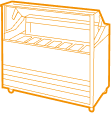
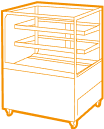
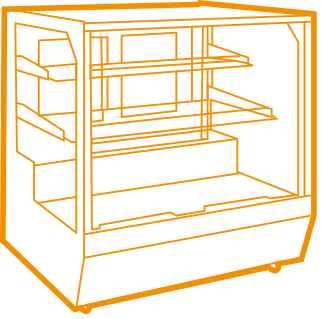
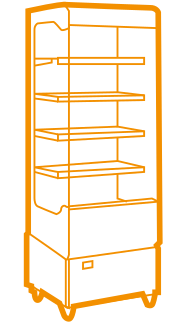
CARBOMA applies this principle in practice. For example, the KC70 series of pastry display cases are manufactured with both glass and double-glazed units. The designers directly attribute this solution to a reduction in refrigeration load and operating costs.
Let's calculate five years of operation
Let's assume the temperature in the store is 25°C, and inside the display case it is 2°C. The temperature difference is 23°C.
For each square meter of glazing, the heat gain through a single pane of glass will be approximately:
5.9 × 23 = 136 W.
Through a 4+10+4 double-glazed unit:
3.1 × 23 = 71 W.
The difference is approximately 65 W of heat load per square meter of glass.
Assuming an average refrigeration system efficiency coefficient of 2, the compressor will require approximately 33 W less electrical power. With 24-hour operation, this is approximately 290 kWh per year, or approximately 1,450 kWh over five years for each square meter of glazing.
At an electricity cost of 5.9 rubles/kWh, the savings will be approximately 8,600 rubles per square meter of glass over five years. Or 32,700 rubles over five years of operation for a KC70 VV 0.9 display case, where the glazing area is approximately 3.8 square meters.
What about the higher price?
If a display case with double-glazed windows costs 120,000 rubles, a similar unit with glass will cost 98,000 rubles. The initial savings are 22,000 rubles.
After three years of operation, the initial price difference will be recouped. The larger the glazing area, the higher the room temperature, and the more expensive the electricity, the faster the double-glazed unit pays for itself.
That's why it's important to professionally compare refrigerated display cases not only by purchase price.
Single glazing reduces the initial investment. Double-glazed units reduce ongoing operating costs.
For a store planning to use equipment for five, seven, or ten years, the lifecycle cost is often a much more important indicator than the difference in price of the display cases on the day they're purchased. If we consider the economy of scale, when the display case fleet is around 1,000 units, we're talking about savings of tens of millions of rubles.
Are you planning to scale up your coffee shop/store or start a new project?
CARBOMA helps businesses save money with product display solutions developed using energy-saving technologies.
Contact us: