









Project Status: Optimal use of retail space without compromising product display or storage quality.
1. Business Challenge
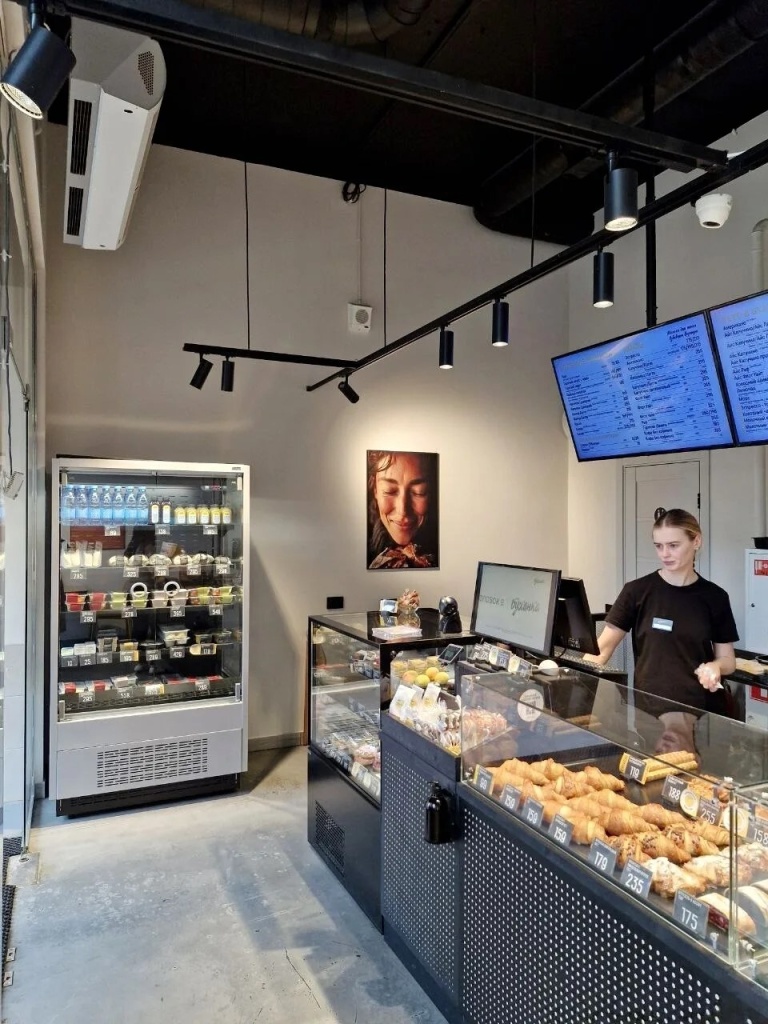
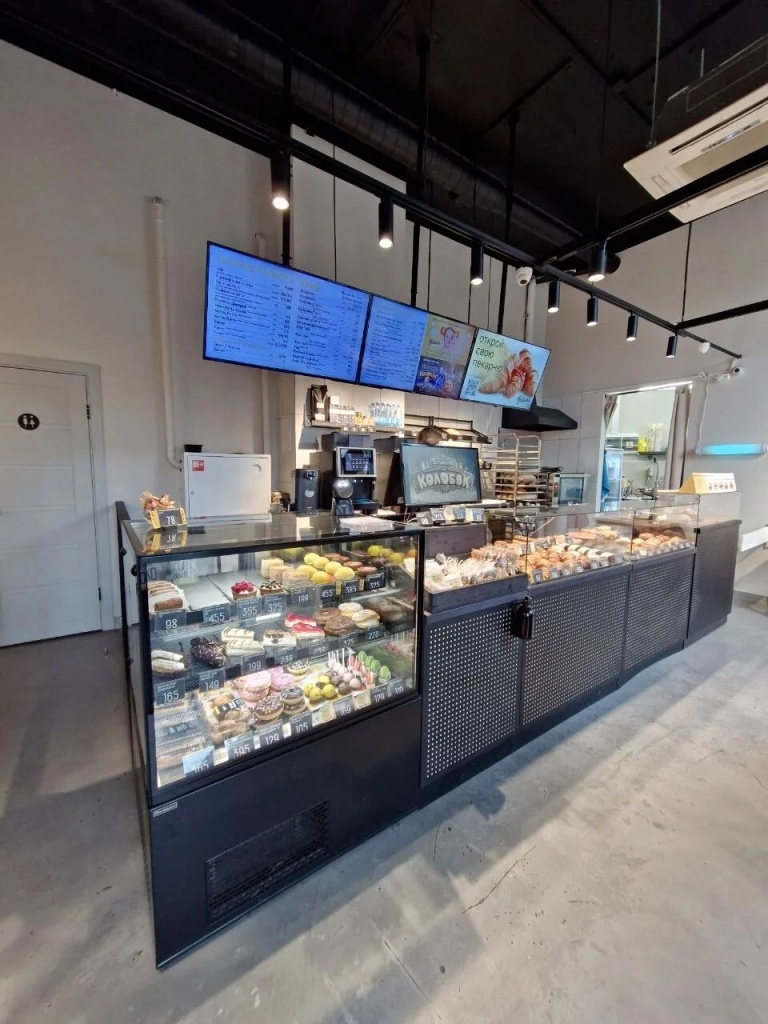
The owner of a “Grab & Go” packaged ready-to-eat food outlet faced a tough design challenge. The store, with a sales floor area of just 50–55 m?, was located in a high-traffic area where the rent required maximum utilization of every centimeter of space.
The business limitations were as follows:
- It is not possible to increase storage capacity; the facility has no backroom.
- The display front must be increased by 70% to launch the main course line compared to the self-service display cases for the KS71 line.
- Customer traffic is impulsive, which requires a wide viewing angle for the display case with no blind spots.
- Compliance with the principles of product placement is strictly required
The challenge was to find an engineering solution that would transform a static corner of the space into an active retail hub.
2. Solution: a corner refrigerated display case with a rotating display.
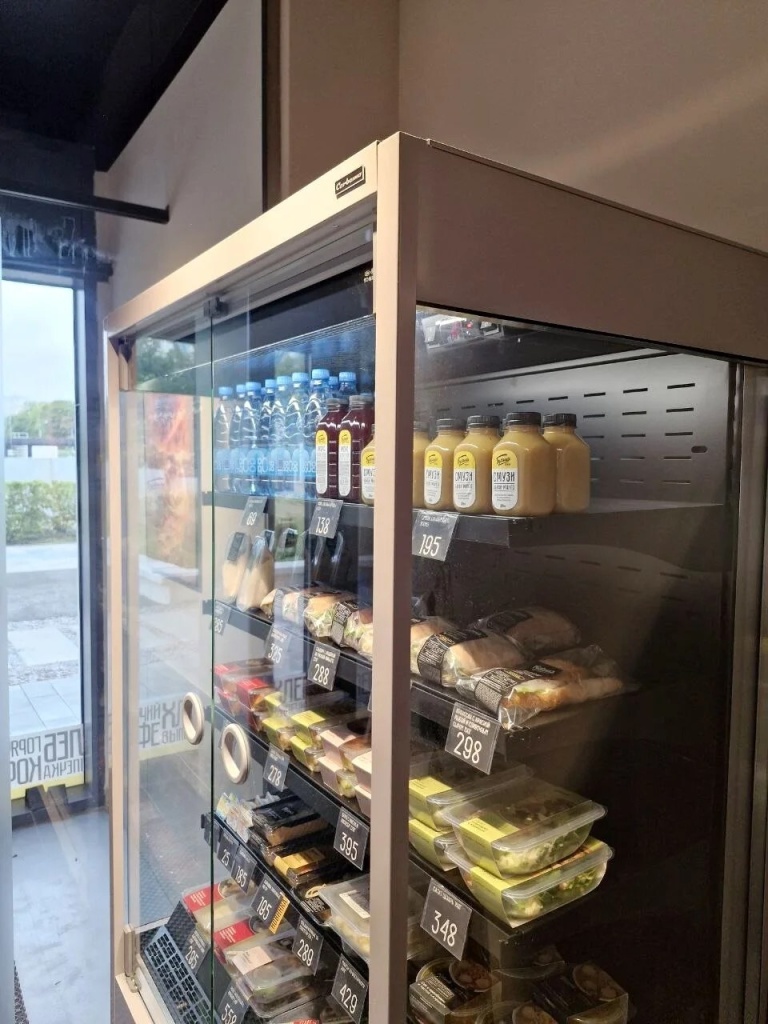
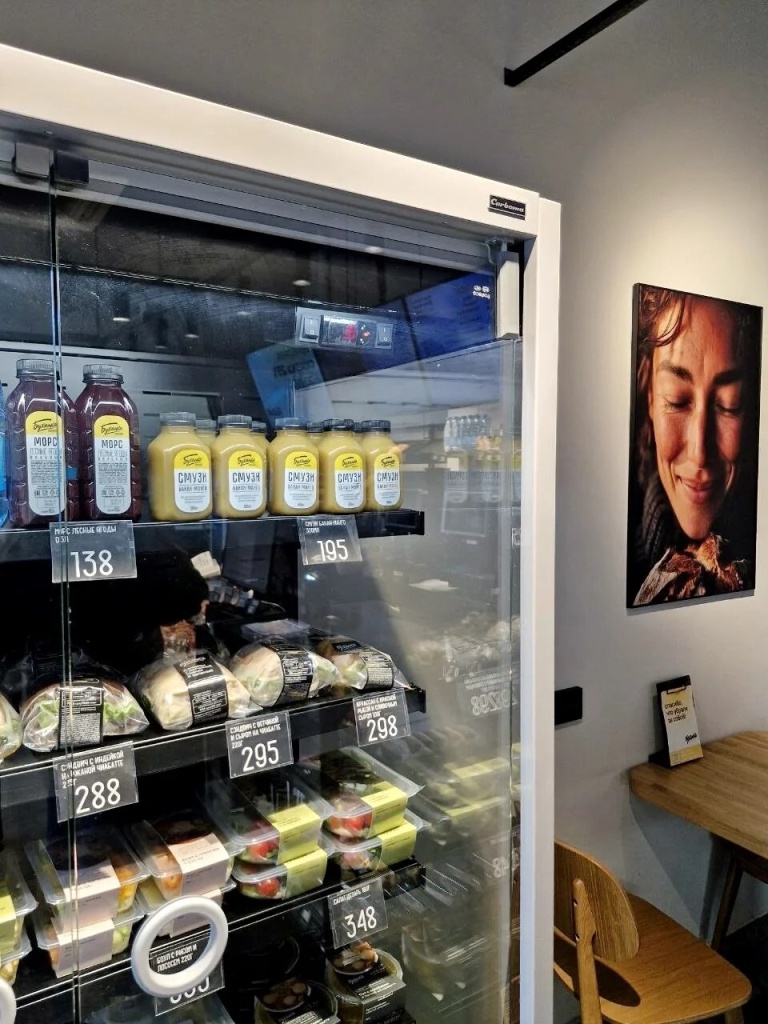
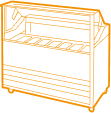
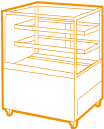
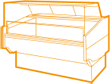
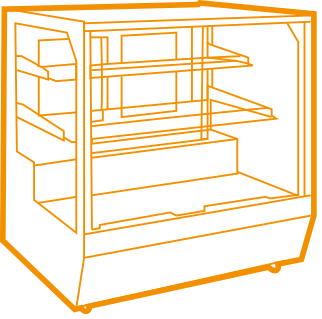
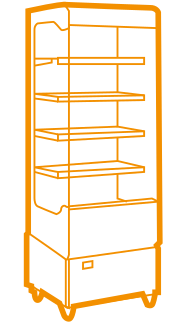
Working in collaboration with the customer’s technologies, we eliminated the standard linear display setup based on CARBOMA KC71 self-service display cases, which had previously been used at these locations. The solution was to install the FC20-07 refrigerated display case with a factory-manufactured glass front and a dynamic cooling function.
Key technical features of the proposed model:
- Built-in Cooling: his compact R290 propane unit is an investment in the future.
- Front Glazing: nsulated glass unit without vertical frames. Eliminates the “blind spot” in the field of view—critical for impulse purchases—while providing over 35% energy savings compared to an open display case.
- Shelf System: Adjustable shelves with a 15-degree incline for gravity-fed (rotating) display. Products are always at the front.
Installation was carried out during the night-time shift without interrupting store operations. Connecting to the utility systems took 30 minutes thanks to a single connection point for drainage and power supply, as specified by the manufacturer’s design bureau..
3. Result
The object's statistics 30 days after the space was restarted confirmed the hypothesis regarding space efficiency.
Quantitative indicators:
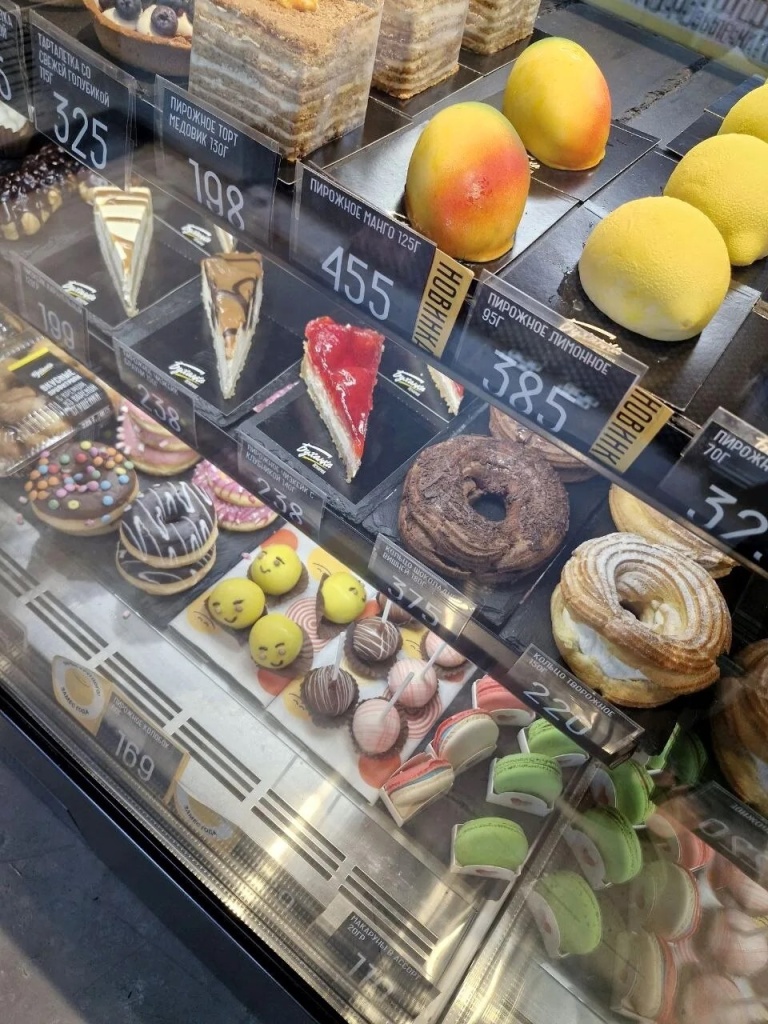
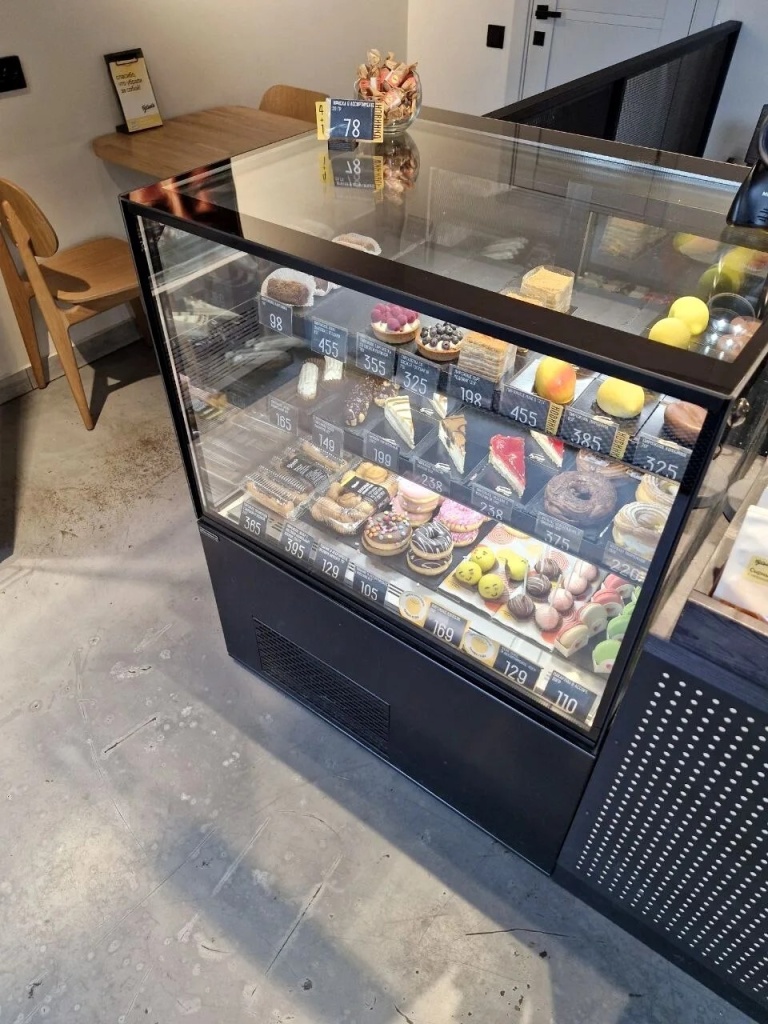
- Display growth: SKU capacity increased by 70% without exceeding loading standards. The depth of the shelves allowed items to be displayed in two rows while maintaining visibility of the items in the back.
- Energy efficiency: зThanks to the single circuit design and the absence of heat flow in the corner joints, energy consumption has decreased by 25% compared to the combined energy consumption of two separate semi-vertical self-service refrigerators.
- Conversion: Thanks to the panoramic view, the “Salads” product category (located at a turning point along the shopper’s route) saw a 35% increase in sales.
Qualitative changes:
The customer’s movement patterns have changed. The corner that used to be a dead-end area has become a focal point. Staff noted that merchandising has become easier: gravity-fed displays have reduced the time needed for restocking during peak hours.
Conclusion for business planning:
Using a factory-made display case for READY-TO-EAT FOOD is not simply the purchase of a “refrigerator,” but an investment in the architecture of the retail space. Given high rent costs and a shortage of square meters, this solution allows you to profit from the layout of the space itself.
Contact us: